Showing posts with label mozilla. Show all posts

Wednesday, August 17, 2016

Google Cardboard 360° Photosphere Viewer with A-Frame

In my previous post "Embedding Google Cardboard Camera VR Photosphere with A-Frame", I wrote that some talented programmer would probably create a better solution for embedding Google Cardboard camera photosphere using A-Frame.

I didn't know that Chris Car had already created a sophisticated solution for this problem. You can view it here on A-Frame blog.

You first might have to use Google Cardboard camera converter tool to make your Google Cardboard photosphere.

.

Friday, August 12, 2016

Embedding Google Cardboard Camera VR Photosphere with A-Frame

Early this year I started looking into the VR (Virtual Reality) web applications. Web browsers now natively support VR applications using WebVR JavaScript API. We can now design virtual worlds using markup language and connect them to devices such as Oculus Rift and Leap motion controller using just a web browser.

To hit the ground running with WebVR. I started an experiment to capture Hackerspace Phnom Penh using Google Cardboard camera app and display it using A-Frame framework. The Google Cardboard camera photosphere is not supported by A-Frame. But the positive responses to my query encouraged me to try an hack using A-Frame Panorama component.


And it works. Almost I had to tweak the scale setting a bit to try get the perspective right but it does work. The ideal solution is to create a A-Frame custom component, that I leave it for more skilled people.

The markup needed for this demo is simple, you can achieve this with one line.


<a-scene>
     <a-sky src="img/hackerspace.vr.jpg" radius="2400" scale="2 1 2"> </a-sky>
    </a-scene>

You can see the demo on Youtube or visit this webpage in an compatible web browser.


Saturday, December 12, 2015

Free SSL Certificate from Mozilla Let's Encrypt project

Last week Mozilla Let's Encrypt project announced the launch of its free, automated and open certificate authority. I had been waiting for this news for a long time. I quickly deployed Let's Encrypt on my staging server to learn how this technology works. The deployment process is painless and very straight forward. The certificates needs to renewed every 3 months, the Let's Encrypt client does this automatically. Thank you Jerome and Ryan for all your help!.

At the time of writing this blog post, Let's Encrypt client was not available for Ngnix server. So I am using the manual method to obtain the SSL certificate here. Please read the latest docs for additional information.


# Check out the let's encrypt source code
$ git clone https://github.com/letsencrypt/letsencrypt

# Stop the Nginx server, we need the client to bind to port 80.
$ sudo service nginx stop

# Start the let's encrypt client and follow the instructions on screen. You need to provide an email address.
$ sudo ./letsencrypt-auto --server https://acme-v01.api.letsencrypt.org/directory certonly --domains staging.example.org
IMPORTANT NOTES:
 - Congratulations! Your certificate and chain have been saved at
   /etc/letsencrypt/live/staging.example.org/fullchain.pem. Your
   cert will expire on 2016-01-02. To obtain a new version of the
   certificate in the future, simply run Let's Encrypt again.
 - If like Let's Encrypt, please consider supporting our work by:

   Donating to ISRG / Let's Encrypt:   https://letsencrypt.org/donate
   Donating to EFF:                    https://eff.org/donate-le

# Edit the Nginix config to point to generated certificates.
$ sudo nano /etc/nginx/sites-enabled/staging.example.org

 listen 443 ssl;
        server_name staging.example.org;
        ssl_certificate /etc/letsencrypt/live/staging.example.org/fullchain.pem;
        ssl_certificate_key /etc/letsencrypt/live/staging.example.org/privkey.pem;

# Restart the Nginx server
$ sudo service nginx start


Please don't forget to test your server using an comprehensive SSL server test such as SSLLabs.


Sunday, August 16, 2015

Developing Firefox Add-ons Video Tutorials

Do you want to develop add-on's for Firefox? Mozilla's Add-on SDK let's you create Firefox add-ons using standard Web technologies: JavaScript, HTML, and CSS. Recently I stumbled across Alexander Saladrigas's videos tutorials that teach Firefox add-ons development with Add-on SDK. The videos introduce you to the tools for creating, running, testing and packaging add-ons and working with buttons, panels and tabs.

Thank you Alexander for making these videos. Hope to see more from you in future.

Wednesday, July 29, 2015

Autonomous Mozilla Stumbler with Android

Mozilla Location Service (MLS) is an open source service to determine location based on network infrastructure like WiFi access points and cell towers. The project has released an client applications to collect the large dataset of GSM, Cellphone, WiFi data using crowd sourcing. In this blog post I'll explore an idea to re-purpose an old Android mobile phone as an autonomous MozStumbling device that could be easily deployed in public transport, taxis or your friend who is driving across the country.

Bill of Materials

  1. Android Mobile phone.
  2. Mozstumbler Android App.
  3. Taskbomb Android App.
  4. Mini-USB cable.
  5. GSM SIM (With mobile data).
  6. Car lighter socket power adapter.
  7. Powerbank (optional).

Putting it together

In this setup, I am using a rugged Android phone running Android Gingerbread. It can take a lot punishment. Leaving a phone in overheated car is recipe for disaster.

From the Android settings I enabled allow installation of non-market applications 'Unknown Sources'. Connected the phone to my computer using the Mini-USB cable. Transferred the previous downloaded apps(.apk) packages to phone and installed the Mozstumbler and Taskbomb applications.

Android homescreen showing Mozstumbler and Taskbomb icons

Configured the Mozstumbler application to start on boot with Taskbomb app. Also configured Mozstumbler to upload using mobile data connection. The phone has GSM SIM card with data connection. Made sure both WiFi, GPS and Cellular data is enabled.

To prevent phone from downloading software updates and using up all the data. I disabled all software updates. Disabled all notifications both audio and LED notifications. Finally locked by phone by setting a secret code. Now the device is ready for deployment. The phone is plugged into car's lighter charging unit to keep it powered up. You can also use a power bank in case where charging options are not available.

Planning to use this autonomous Mozstumbler hack soon. Perhaps I should ask Thejesh to use on his epic trip across India.

Saturday, July 18, 2015

Webmaker tools on Raspberry Pi

Last year in Bamako, Mali I watched the participants struggle with slow Internet connectivity during a web literacy WebMaker event. I thought it is very important to make Webmaker tools available offline on a local server. I started working on a custom Rasbian based SD-card image with Mozilla Webmaker tools on Raspberry Pi. The setup uses the most minimal setup without any connectivity to Internet. The Raspberry Pi Server will host Web maker tools like Thimble with some learning templates. The users could connect to the server with WiFi from their laptops or using school computers using local Ethernet connection.

The goal was to finish the project by MozFest East Africa in July, 2015 and release it for testing.

How to use Webmaker tools on Raspberry Pi?

Download the testing version of the image here. It is large 2.8GB file, it will take some time to download. In this setup I am using an older Raspberry Pi B model with 8GB SDCard with a TP-Link TL-WN322G+ USB WiFi dongle. The WiFi dongle is optional, you can connect the Raspberry Pi to your router or networking hub with an Ethernet patch cable.

  1. Download and write the image to the SD-card (Tutorial)
  2. Boot the raspberry Pi with the SD-card
  3. Connect the Raspberry Pi to your local Ethernet network. (If you have USB Wifi dongle then you can connect to 'Webmaker' WiFi network with 'raspberry' password.)
  4. On your computer, Open browser and type 'http://webmaker.local' You should see the Thimble App UI.
Webmaker Thimble running on Raspberry Pi server

Please do report any problems and bug reports!


Friday, October 3, 2014

Micro SIM card adapter

Eating your own dog food or Dogfooding in technical parlance means the software maker uses their own software thus appreciate its strengths and weaknesses (and hopefully improve on those.)

Usually I dogfood multiple mobile phones running early releases of Cyanogenmod and Firefox OS. Doing this is easy when you have multiple SIM cards. But if you have to swap your SIM card between Nexus 4 (micro-SIM) and Firefox OS device (mini-SIM) then you'll love this inexpensive Nano SIM adapter from NooSY.


Sunday, September 21, 2014

Noto Fonts Update

Google Internationalization team released new update of Noto Fonts this week. The update brings numerous new features enhancements. Please read the project release notes for the full list of changes.

You can preview the fonts and download them at google.com/get/noto.

Google Noto project logo

Testing fonts on Firefox OS device

It is very simple to test the Noto fonts on a Firefox OS device. Just copy the the font files into /system/fonts folder and reboot the device. Don't forget to back-up the existing fonts on device first.

Am writing this blog post in Bangkok, So I am going to use Thai Noto fonts in these instructions. Connect your Firefox OS device to the computer with a USB cable. Make sure to turn on developer settings to enable debugging via USB.


# Backup the existing Thai font
$ adb pull /system/fonts/DroidSansThai.ttf  

# Remount the /system partition as read-write
$ adb remount /system 

# Remove the font on the device
$ adb shell rm  /system/fonts/DroidSansThai

# Unzip the previously downloaded Thai font package
$ unzip NotoSansThai-hinted.zip 

# Push to Firefox OS device 
$ adb push NotoSansThai-Regular.ttf /system/fonts

# Reboot the phone. Test your localization by selecting your language 
#in Language settings menu or navigating to local language webpage with browser app.
$ adb reboot


Wait, All I see is Tofu?

If you see square blocks (lovingly referred as Tofu) instead of characters, that means the font file for your language is missing. Please double check the steps, if everything fails restore the previously copy of your font file.

What is Font Tofo, firefox OS screenshot

Happy Hacking!

Monday, September 15, 2014

Firefox OS: Designing Khmer Keyboards and Fonts

Back in Cambodia this week to participate in Barcamp Phnom Penh 2014. It is great to experience the energy and openness of Phnom Penh and the Cambodian youth's insatiable zeal to learn all things tech. Over the past few years, the barcamps helped us build the Mozilla community in Cambodia.

Cambodia is a fast growing economy in the region. One survey notes significant increase in smart phone ownership from last year. And also increase in Khmer supported smart phones and feature phone in the market. At Barcamp Phnom Penh I presented a Firefox OS talk about the on-going Khmer Internationalization (i18n) work and invited the audience to contribute to Firefox OS. Planning to organize hackathons to work on Khmer keyboards with the Mozilla community here.

After my talk, Vannak of Mozilla Cambodia community talked briefly about Mozilla community to the audience. And we did a presentation about Mozilla Web Maker tools. I hope we'll organize more web literacy events in future. Keep watching this space for more news from Cambodia, the kingdom of wonder.

Wednesday, April 30, 2014

The Web We Want: An Open Letter (Video)

The Web is our largest shared resource. Let's keep it free and open for us, and for the next generation.

What kind of Web do you want? Tell us: http://mzl.la/1hHyqBq


Learn more about at webwewant.mozilla.org and WebWeWant.org global movement to defend, claim and change the future of the Web.

Thursday, December 5, 2013

Mozilla Taiwan Localization Sprint

Last week I traveled to Taipei for localization sprint with Mozilla Taiwan community. The community translates various Mozilla projects into Chinese (Traditional)(zh-TW). The goal of a localization sprint is to bring together new and experienced translators under one roof. Such events help promote knowledge sharing through peer learning and mentor-ship. Special thanks to Michael Hung, Estela Liu and Natasha Ma for making the Mozilla space available and inviting by providing Pizzas.

The event began with a short introduction to localization by Peter Chen, followed by a brief overview of various translation projects such as translating Mozilla Support (SUMO) by Ernest Chiang, translating Webmaker by Peter Chen, translating addons.mozilla.org by Toby, translating Mozilla Developer Network(MDN) articles by Carl, translating Mozilla videos with Amara tool by Irvin and translating Mozilla Links by Chung-Hui Fang. The speakers then organized participants into topic specific working groups, based on each individual's interest.

Arky at Mozilla Taiwan localization sprint

It was interesting to see how people used various tools such as Narro, Pootle, Transifex and even Google Docs for translation. It gave me an opportunity to observe and note some of the potential problems in the translation process. At the end of the day, everyone gathered to share and present their group's work. The also took time to answer question that participants had. All in all it was a very productive and enjoyable event. Mozilla badges were issued to recognize the participants' contributions.

Check out the event photos and etherpad for additional details. The Mozilla Taiwan community will continue to translate during their weekly MozTwLab meetups and a follow-up event is planned for the sprint 2014.

Tuesday, November 26, 2013

Vietnamese Language Tools: Developing Keyboards and Spell-checker

Mentoring Mozilla Vietnamese localization team to develop Vietnamese keyboard and spell checker for Firefox OS. We built and tested Vietnamese keyboard during Mozilla Vietnam L10N sprints in Hanoi. We will integrate this into Firefox OS after Mozilla UX team improves the keyboard design to accommodate large set of alternative character keys.

Lewtds created Vietnamese spell checker using the Ho Ngoc Duc's word list. The Vietnamese language processing work is very limited. We haven't found any good data to that create a frequency list for the Vietnamese spell checker. Any pointers would be much appreciated.

Please read the Mozilla FirefoxOS keyboard documentation to learn more about developing keyboards in your language.


Saturday, June 22, 2013

Efforts continue to promote Firefox Maithili

Maithili is the native language 34.7 million people in Northern India and Eastern Nepal. In college I would try to follow the friendly banter in Maithili listening for similar sounding words in Hindi. It was only later while working on computational linguistics that I truly appreciated the richness of the Maithili language.

Firefox Maithili was released last year, making it 78th language to be added to Mozilla localization. The challenge of localization does not end after translating and shipping Firefox.Today Mozilla Maithili Localization team continues their efforts to promote Firefox Maithili by organizing workshops.

Maithili is not only a language, it is also a source of rich wisdom – Mr. Ajay Kumar Jha

On 29th May 2013, Mozilla Firefox Maithili workshop was organized by community of Maithili Computer developer working under Bhasha Ghar, a group of volunteers working for small languages having less resources. Mozilla Firefox Maithili workshop was a full day workshop where the community working with Mozilla along with some experts of Maithili language sat together to discuss the issues and challenges related to Firefox Maithili.
Read the complete Mozilla Firefox Maithili Workshop Report May 2013

Wednesday, June 12, 2013

African Network For Localization (ANLoc) Conference 2013

Traveled to Johannesburg, South Africa, to attend African Network For Localization (ANLoc)'s Terminology and Localisation in Africa and Beyond Conference earlier this year. It gave me an opportunity to learn the history of African languages in cyberspace and meet the people behind various multilingual initiatives. The conference brought together language professionals, academics and open source developers to learn about terminology development and localization platforms.

Language is the key for unlocking the potential of Africa. The African Network for Localization (ANLoc) is a non-profit that supports African language technology development. The ANLoc partners were instrumental in the numeration and standardization of 100 African languages. The ANLoc partners and sub-projects developed Unicode fonts, keyboard input systems, translation tools and terminologies for African languages. They also devised training programs for building sustainable volunteer driven localization communities.

The conference featured technical talks, break-out sessions and brainstorming sessions. There were in-depth discussions on the various facets of multilingualism in cyberspace in context to African languages, the challenges of translating computing terms in African languages, the use of machine translation methods and the development of linguistics resources such language dictionaries and terminologies. The conference organizers maintained a good balance of discussions, along with practical hands-on workshops. The size of conference made interactions easier. It was good to meet Mozilla localization contributors from over 10 African languages during this event.

The African Network For Localization (ANLoc) conference group photo

ANLoc's project localized widely used open source Mozilla Firefox web browser in many African languages. The ground realities of mobilizing and sustaining communities in Africa are apparent. Finding contributors is difficult. Most contributors refrain from volunteering due to economic reasons. The overall economic development and access to digital technologies is limited to few regions in Africa. The availability of Internet has improved but the cost is still prohibitively high. I shared my community building experiences from similar resource constrained environments across the world.

Participated in break-out sessions on developing style guides for localization and Mozilla localization processes.
The FirefoxOS localization sprint was organized as part of the event. The localizers worked in groups to translate Mozilla FirefoxOS mobile operating system using Pootle web translation platform.

FirefoxOS localizations in African languages
Developing localization style guides workshop

Talked about Android Internationalization and adding African language fonts and keyboard support to Android. Android currently supports few major African languages: Swahili, Amharic, Zulu and Afrikaans, but more African language coverage is needed. Cheap Android devices are flooding the African market. Today, the first internet experience for many is not on a desktop computer but on mobile phones. Mobiles play a great role in accessing information and even transfering money.

The brainstorming sessions were very interesting. The problems discussed were both at an economic and social level. These problems are similar in nature to the countries where I have been working for the past few years.

The lack of availability of African local content on the internet was a major hurdle. The African diaspora spread across the world and few local governments and non profit organizations were involved in developing local language content. The tide seems to be turning now, with increasing availability of the Internet on mobile phones. Social media and user generated content is now bridging the gap.

ANLoc Brain-storming Session on african languages

This conference gave me a framework for my future activities in Africa. I'll be traveling to East Africa to participate in Tech4Africa Nairobi Tech Day and organize localization hackathons. Such events will help us work on Mozilla Firefox in some of the major languages and help build sustainable Mozilla communities in Africa.


Friday, May 17, 2013

Mozilla Localization Makes a Positive Social Impact

Mozilla brings power of the web into ordinary people's hands. Every day I spend countless hours working with volunteer communities around the world to translate Firefox web browser. Reading Sudheesh Singanamalla's blog post about his encounter with a farmer in rural India was such a touching experience.

A Localization journey - A Farmer's tale - A Delightful Experience

It was on my way back in a cramped out bus, travelling researching about language changes and variations within the state of Andhra Pradesh, that I sat next to a man, quite old.

Sudheesh and the old man

Me : What do you use in the internet? How do you talk to your son?
Old man: I go to Rajat's Net Cafe nearby by house and then talk from there on Google (meant Google+)
Me : Do you know how to read English and understand which button to click and so on?
Old man : Oh, i don't know English, but i use it in Telugu. The shop guy Rajat has seen me since he was small, so after my son went to Delhi, he separately bought a Telugu keyboard so that i can be using the keyboard.
Me: Okay, but then how do you read the information on the computer screen? Isn't that in English?
Old man : (Laughs) Don't you know, there is this software something called Firefox, it is in Telugu.
Me : Really? Can you tell me how the software looks?
Old man : You should know more, you're an engineering student but if you ask i'll tell you, its a small thing like this earth picture but a small cat , orange in colour is holding it.
Me: (smiling crazily) You know how to use it in Telugu?
Old man : Yeah, its not hard, I know how to read Telugu and also know how to use mouse, so clicking gets me the job done.
 

Tuesday, April 30, 2013

Barcamp Yangon 2013

Whoever said "Change is slow" hasn't been to Myanmar (also known as Burma). In seven short months, the country transformed into the something I now barely recognize. Getting Myanmar visa never been this easy, many direct flights to Yangon from all international hubs in South East Asia everyday. The Yangon airport is chocked with tourists, the prices just went through the roof. This time I didn't bring any crisp, unmarked hundred dollar notes to haggle for better exchange rate with the punters on the Yangon streets.

Walking out of the airport, I realized Myanmar has switched to driving on left side of the road. The roads are clogged with second-hand Japanese minivans, imported SUV's and decades old taxis jostling for space. For a moment, I longed for the small colorful Mandalay jeeps plying the quiet Yangon streets at sedate pace. Stuck in the traffic jam, I killed time by counting different cars with left and right steering wheels.

If you get stuck in the traffic jam, you can use the 3G mobile network to catch up with your email. Mobile SIM cards doesn't cost US$2000 anymore. Mobile SIM cards with data plan can be rented for $10 a day. If you are lucky you might even find $20 voice only tourist SIM cards. Mobile connections are still very expensive, it costs US$150-$200 for mobile connection. Perhaps it might soon change when the telecommunications market opens up in next few years.

Back in Myanmar after two years for Barcamp Yangon 2013, the biggest community organized un-conference in the world. This year over 6000 participants are expected to attend this event. Barcamps are hugely popular in this country, the event addresses the digital divide with open sharing and even help kick-start technology entrepreneurship activities.

Few years ago, young students would attend to use the free wireless internet access at Barcamp Yangon. Internet access was restricted to educational institutions and Internet Cafes. Today you can get internet connection in restaurants, cafes and even at home. It is easy to buy personal computers, smart phones and tablets locally. There will be explosive growth of internet users in Myanmar.

During Barcamp Yangon 2011 I kick-started the effort to translate Firefox web browser into Burmese. I have been mentoring the local Mozilla Myanmar community ever since. It had been a long road, we had many problems: building Mozilla community, finding volunteers for translations and deploying right web based localization tools. This trip to Myanmar would give me a chance to work with the community and resolve translation issues that are blocking Firefox Burmese release.

Barcamp Yangon 2013

Once again the barcamp organizers and volunteers efficiently organized such a large event. The event attracted significant
sponsorship this year, the talks in main rooms were marketing pitches from those sponsors. There were some interesting talks 'Make the web speak your language' and 'Women in technology' panel discussion. It was good to see many international participants at the event, they were in Myanmar on vacation and decided to attend the event. The Q&A session with the international barcampers was a good experience, it provided an opportunity for young Burmese barcampers to interact and get perspective on wide ranging subjects.
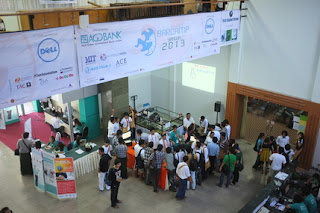
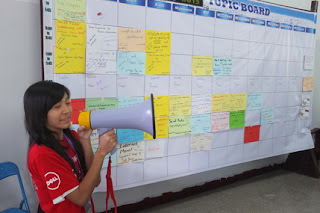
Barcamp Yangon Venue
Barcamp yangon Tech Talks
Make the web speak your language

In my talk How to become a Firefox Hacker I shared how one can leverage existing web development skills to contribute to Firefox. Mozilla Myanmar localization lead contributor Zinmin shared the Firefox localization process and gave a demo of Pootle web based translation tool. The participants were encouraged to join the Mozilla Myanmar community and localization sprint after the Barcamp Yangon.

Mozilla Myanmar localization demo by zinmin

Attending Barcamp Yangon gave me a good opportunity to keep the pulse the fast changing Myanmar. It was good to reconnect with the open source communities and meet people in technology and non-profit world. Next year I hope to attend Barcamp Mandalay, it seems to have more developer focused audience.

Ubuntu Myanmar Community

Mozilla Myanmar Localization Sprint

After Barcamp Yangon, Zinmin organized Burmese localization sprint in Yangon. The localization sprint provides hands-on training for new localizers. After a quick introduction from Zinmin and the team started translating remaining strings Firefox Aurora. The Pootle web based tool does perform well bandwidth constrained environment such as Myanmar. Zinmin cleaned up most of the translation errors that were blocking the productization of Firefox Burmese Aurora.

During the sprint, Sajal and I spent some time testing Firefox Mobile. Firefox Mobile is important in countries like Myanmar where there is a large growing mobile web users than desktop users. However due to economic sanctions Google Playstore is not available in this country. Burmese users resort to various alternative app stores to find apps for Android devices. Another problem is network latency, for instance, tweeting pictures was really difficult. We looked in how to test Android apps network latency and performance issues.

You can read more about Mozilla L10N sprint on Zinmin's blog post in Burmese and the download the latest Firefox Burmese Aurora here.

Technology Entrepreneurship and Start ups in Myanmar

Spent some time meeting various technology entrepreneurs in Yangon. Start-up incubators like Rocket Internet and few others opened shop in Myanmar. Expats and Burmese diaspora are returning to start technology start-ups. Along with opportunities from the burgeoning economy there are challenges: People with good technical skills are hard to come by, the overhead costs are really high due to inflated prices.

I hope you'll get a chance to visit Myanmar and experience its rich culture. Perhaps you might wanna join the
Barcamp Yangon next year or spend some time working I'll help you find a co-working space in Yangon.

Wednesday, February 27, 2013

Mozilla Tagalog Localization Hackathon in Manila

Philippines has rich linguistic diversity. Through out its history Philippines was influenced by language and traditions of those who came in search of gold and other precious minerals. Today, you can hear smattering of Sanskrit, Arabic, Chinese, English, and Spanish in Tagalog.

Tagalog is the widely used Philippine dialect. Filipino, the National Language of the Philippines is composed primarily of Tagalog words, idioms, and phrases. Urban Filipinos are fluent in English. Traveling few hours away from Metro Manila, I noticed people preferred to speak in Tagalog.

The Mozilla Tagalog localization was kick-started by Seth Bindernagel around 2010. After a hiatus, the Tagalog localization effort now gained momentum thanks to good leadership and innovative community initiatives to encourage localization (See Help Us Translate Firefox Aurora to Tagalog & Get a Mini-Shirt). We also have new localization teams for Chavacano, Bikol and Lloko languages.

The hackathon in Manila provided me an opportunity to connect with the teams and I hope to keep this momentum going. Shared few ideas and emphasized on quality and consistence of translation. Such events are good for not only attracting new translators, but also discuss the problems in translation. The event attracted students, bloggers, technology professionals and contributors from Tagalog Wikipedia.

Talking to tagalog translators in manila

The Firefox Tagalog localization looks very promising. Came back from the hackathon with confidence that we can start productization very soon. And don't forget to join the next Tagalog Firefox Translation Marathon on April 9, 2013

Sunday, February 17, 2013

National Open Source Conference of Afghanistan (NOSCA) 2013

This week National Open Source Conference of Afghanistan (NOSCA) starts in Jalalabad, Afghanistan. The event is organized by the National ICT Alliance of Afghanistan. It will be held at Nangarhar University on February 19-21, 2013. Unfortunately I will not be able to attend this event. Please share the conference information with your friends in the region and encourage people to participate.

Building a Mozilla community in Afghanistan is on my list. During ICANN 41 Singapore I met few technologists from Afghanistan and remained in touch with them ever since. Last year we kick-started Firefox Aurora Pashto and Dari localization effort.

Communications in Afghanistan has grown considerably. Entrepreneurship is thriving despite the problems. Recently Divon Lan wrote about Afghanistan's first women technology entrepreneur on his blog.

Get in touch with me, if you want to get involved in Mozilla Afghanistan community building effort.

Monday, February 11, 2013

Firefox Responsive Design View to rescue

Here is a good example of using Firefox Responsive Design View, DOM and Style Inspector to debug web design issues. Noticed this problem with Mozilla The Den blog's site description while browsing the web with Firefox Mobile browser. Fired up my laptop to check this design issue with Firefox Responsive Design View. Then I used the DOM and Style Inspector to zero in on the CSS rule that adds this extra padding (padding-right: 340px;). Voila! It is time to send this patch to the developer.

Debugging and Fixing CSS issues with Firefox Web Developer tools

Did a screen capture of the whole process. Don't see the embedded video, you can watch it on YouTube.


Saturday, February 9, 2013

Mozilla Firefox Vietnamese Beta Released

Mozilla Firefox Vietnamese (19 Beta) was released this week. It is the culmination of my two year effort to re-animate the Mozilla Vietnamese localization team.

Building an active Mozilla community in Vietnam was the first step. Found few passionate young volunteers in the local open source community in Hanoi. Spent the next year mentoring these young volunteers into community leaders. Participation in local events attracted others to join the new Mozilla Vietnam community. Hands on Mozilla developer workshops and Mozilla localization sprints ensured that we retained most these new contributors.

Contributions to Mozilla Firefox Vietnamese localization had been stagnant since last fourteen rapid release cycles. During this period the Vietnamese Firefox had many parts of the browser untranslated thus hampering user experience of the browser. Community driven open source projects often suffer when active contributors leave. Building sustainable communities tackle this problem with new contributors stepping in to take up the reins.

Mozilla Localization community members working on translating firefox strings into vietnamese

I had been organizing Mozilla Localization sprints since August 2011. We met at the Hanoi community space, working on localization strings using web based translation software such Narro and Pootle.The localization sprints with small groups provided a good opportunity to develop localization skills of new contributors and improve the quality of translations as well.

Thanks to efforts of these Mozilla Vietnamese Localization (L10N) community members, We have a fully localized Firefox Vietnamese Beta release.

  • Trương Anh Tuấn
  • Nguyễn Hà Dương
  • Đàm Tiến Long
  • Nguyễn Phan Hải
  • Đặng Duy Thanh
  • Ngô Trung
  • Nguyên Thế Hùng
  • Tuan Zendf
  • Hakuna Matata
  • Nguyễn Vũ Hưng

Don't forget to Download Firefox Vietnamese Beta today.

Popular Posts