Showing posts with label travel. Show all posts

Wednesday, August 23, 2017

Noise Bridge China Trip # 7

It time for the next edition of Noise Bridge China Trip #7. This annual trip is organized by San Francisco based Noise bridge hackerspace.

Head over to the event Wiki page for more information on how to join the trip. If you are interested to travel with fellow makers and hackers to various manufacturing spaces in China then this is your golden opportunity.


As of writing this blog post, this is tentative schedule.

  • 7-October-2017 -- Leave home for Hong Kong (arrive in Hong Kong on 8-October)
  • 8-October-2017 -- We all meet in Hong Kong -- hotel: to be determined
  • 8-October to 11-October -- Hong Kong
  • 11-October to 16-October -- Shenzhen
  • 13-October: tour of factories
  • 15-October, 4pm-6pm: Chaihuo x.factory Bring-A-Hack
  • 16-October to 19-October -- Xi'an
  • 19-October to 24-October -- Beijing
  • 24-October to 28-October -- Shanghai
  • 28-October-2017 -- fly home (arrive NA or EU on same day)

Keep an eye on the Wiki page
https://noisebridge.net/wiki/NoisebridgeChinaTrip7
for most up-to-date information.


Thursday, September 1, 2016

Noisebridge Hacker Trip to China #6

If you are excited by my previous post about Shenzhen the silicon valley of hardware, then here an exciting opportunity to visit China with fellow hackers and makers.

Every year San Francisco based Noise bridge hackerspace organizes a trip to China. This trip gives makers and hackers an chance to learn what's happening in China.

This year the trips covers vast tracks of China from Beijing to Hong Kong. You'll have an opportunity to attend various events such Shanghai Maker Carnival and Maker Faire Shenzhen along with a visit to local maker spaces and hackerspaces.

Here is tentative schedule.

  • 10-October-2016 -- Leave home for Shanghai (arrive in Shanghai on 11-October)
  • 11-October-2016 -- Meet in Shanghai (hotel TBD)
  • 11-October to 17-October -- Shanghai
  • 15-16-Oct: Shanghai Maker Carnival
  • 17-October to 19-October -- Hong Kong
  • 19-October to 24-October -- Shenzhen
  • 21-23-Oct: Maker Faire Shenzhen
  • 24-October to 1-November -- Beijing
  • 1-November-2016 -- fly home (arrive NA or EU on same day)

Send an email to the organizer and put your name up on the Noisebridge hacker trip to china #6 wiki page . Too bad I couldn't join the China trip this year but I'll try to join the next trip.

Wednesday, August 24, 2016

Shenzhen: The Silicon Valley of Hardware (Video)

Follow maker and hacker extraordinary Andrew 'Bunnie' Huang to Shenzhen, China. This Wired.com documentary provides a rare insight into Shenzhen,the silicon valley of hardware. Understand what makes Shenzhen produce such innovative products at an incredible speed.

For me, the one most striking highlight of this documentary was to learn about 'Shenzhai' culture, it is akin to hacker or maker culture. I believe the values of open design, sharing of technical know-how and healthy dose of hubris defines Shenzhai culture. It drives the innovative product design in Shenzhen. Today this culture of design and easy availability of manufacturing facilities is attracting designers, makers, hackers and entrepreneurs.

I hope you'll enjoy this documentary and hopeful make your way to Shenzhen in near future.


Friday, December 4, 2015

EpiHack Myanmar 2015

Join fellow developers, open data enthusiasts and health specialists at EpiHack 2015 in Yangon, Myanmar, to uncover new ways to collect, track, and share data on emerging disease outbreaks. The event will held from January 18 till 22 2016.


Epihack 2015 Poster

What is <EpiHack/> ?

EpiHack is a health focused hackathon bringing together health and technology specialists to collaboratively produce ideas, tools and a network that can act as a first line of surveillance and response for disease outbreaks.

EpiHack Myanmar is the latest in a series of events implemented in partnership with the Skoll Global Threat Fund in Thailand, Laos, Cambodia, Tanzania and Brazil.

Why Myanmar?

Connectivity is quickly increasing across Myanmar with the arrival of new mobile providers and growing investments in infrastructure. Mobile and web technologies offer unprecedented opportunities to optimise and streamline the collection, dissemination, aggregation and visualisation of disease related information. EpiHack will build on such technologies to improve disease surveillance and outbreak response in Myanmar.

This event is by invitation only. Please register here. To keep informed on EpiHack Myanmar and EpiHack developments, follow @EpiHack on Twitter and join the EpiHack community on Facebook.

Also join the world's biggest unconference Barcamp Yangon right after Epihack 2015.

Wednesday, November 11, 2015

Buying Cameras, Lens and other photography gear in Tokyo

If you are ever flying through Tokyo and have few hours to spare. Head into town on the airport bus to Shinjuiku's Yodobashi Camera. The store is situated few hundred feet from the Shinjiku station airport bus stop. The Yodobashi camera store is photographers delight. The staff speak good English and are very helpful. It might be a good idea to first check the Yodobashi website to see they have the products you want in stock.

Photo credit Daisuke Matsumura

The store offers VAT discount for foreign travelers and further discount on purchases using Visa cards. The only downside is that the warranty on the products tends to be limited for Japan only.

Enjoy! And don't forget to share your Japan camera shopping experiences in the comments below.

Wednesday, August 12, 2015

Training your Photographer's Eye

"All the technology in the world can't help you see a good picture" - John Greengo

For many years I traveled without a camera. Looking at the world, observing the people and the events. Becoming more aware of my surroundings and training my eye to see a good picture. The lack of camera removed the need to look through the lens or worry about the technicalities of photography.

Michael Freeman's The Photographers Eye book cover

Michael Freeman's The Photographers Eye is great way to continuing my training. The book teaches the fundamentals of design, composition, light and process of photography. The book is written in a simple jargon free language with some beautiful pictures. If you want to become a good photographer, do read and assimilate this book. It is *must* read for every aspiring photographer.

Saturday, August 8, 2015

Buying Electronics Components in Hong Kong and Shenzhen

Hong Kong and Shenzhen are mecca for hardware enthusiasts. In my previous blog post I shared about buying Arduino in Hong Kong. Let me share some more information about sourcing electronic components in Hong Kong and Shenzhen.

Dim Sum Labs Hong Kong's hacker space maintains a local guide to buy electronics on their Resources page.


View HK/SZ DIY Computer, Electronics (Hackjam/DSL) - Google Maps in a larger map

The Scoutbots projects aims to explore and protect the Oceans with Open Technologies. They maintain a comprehensive list of material suppliers in Hong Kong and Shenzhen here https://sites.google.com/a/scoutbots.com/wiki/home/references/material-suppliers-in-hong-kong-shenzhen

Happy shopping!


Wednesday, May 6, 2015

Phnom Penh: A Cultural History

Few months after moving to Phnom Penh, I started to read Milton Osborne's Phnom Penh: A Cultural History. The book really helped me appreciate the city as I walk through its numerous streets and alleyways.

Milton Osborne writes beautiful prose that takes one back to beginning of Cambodia's capital city and its troubled history. I would highly recommend this book to travelers visiting Phnom Penh, Cambodia.


Phnom Penh: A Cultural History (Cityscapes) by Milton Osborne

As a one-time resident of Phnom Penh and an authority on Southeast Asia, Milton Osborne provides a colorful account of the troubled history and appealing culture of Cambodia's capital city. Osborne sheds light on Phnom Penh's early history, when first Iberian missionaries and freebooters and then French colonists held Cambodia's fate in their hands. The book examines one of the most intriguing rulers of the twentieth century, King Norodom Sihanouk, who ruled over a city of palaces, Buddhist temples, and transplanted French architecture, an exotic blend that remains to this day. Osborne also describes the terrible civil war, the Khmer Rouge's capture of the city, the defeat of Pol Pot in 1979, and Phnom Penh's slow reemergence as one of the most attractive cities in Southeast Asia.

About the Author

Milton Osborne is an Adjunct Professor in the Faculty of Asian Studies at the Australian National University, Canberra. He is the author of nine books on the history and politics of Southeast Asia.


Monday, September 15, 2014

Firefox OS: Designing Khmer Keyboards and Fonts

Back in Cambodia this week to participate in Barcamp Phnom Penh 2014. It is great to experience the energy and openness of Phnom Penh and the Cambodian youth's insatiable zeal to learn all things tech. Over the past few years, the barcamps helped us build the Mozilla community in Cambodia.

Cambodia is a fast growing economy in the region. One survey notes significant increase in smart phone ownership from last year. And also increase in Khmer supported smart phones and feature phone in the market. At Barcamp Phnom Penh I presented a Firefox OS talk about the on-going Khmer Internationalization (i18n) work and invited the audience to contribute to Firefox OS. Planning to organize hackathons to work on Khmer keyboards with the Mozilla community here.

After my talk, Vannak of Mozilla Cambodia community talked briefly about Mozilla community to the audience. And we did a presentation about Mozilla Web Maker tools. I hope we'll organize more web literacy events in future. Keep watching this space for more news from Cambodia, the kingdom of wonder.

Thursday, July 31, 2014

Buying Open Hardware in Nairobi

Getting open hardware components in Nairobi is expensive. It is worth buying internationally and try to ship them to Kenya. That does takes time and more resources. So if you need that crucial component for your project Nerokas.co.ke is your best bet. They stock most open hardware boards such as Arduino, Raspberry Pi, various electronic components and sensors.

  • Emko Plaza, Garissa Road
  • Thika, Kenya
  • P.O Box 18936-00100,
  • Nairobi, Kenya
  • Telphone:(+254) 020 813 8956 /
    0706 246 248

Happy Hacking!

Sunday, July 6, 2014

Origin: Talking about "fromness" (July 23, 2014) Phnom Penh, Cambodia

In my travels over the years people asked me 'Where are you from?'. It is a mundane, yet profound question. For a digital nomad, home is a transient concept. In my conversations with Dipika of Oranguntan Swing, I shared few ideas that inspired the 'Origin: talking about "Fromness' event. If you are based in Phnom Penh, Cambodia. Please join this conversation on July 23, 2014.


Poster of Origin: Talking about 'Fromness' in Phnom Penh, Cambodia

Saturday, March 22, 2014

So-Fi Sunrizer Solar bag with flexible panels

Robert Kaiser walks in with his Sunrizer bag and says "Here is what you need for Africa". This designer bag sports a flexible solar panel and provides USB connections to charge your devices while you carry. Stylish, Waterproof and rugged enough to hold your laptop, mobile phones, music player and charger cables. Love this bag but at €179.00 EUR it's expensive.


Checkout out www.So-fi.com for more solar products.

Wednesday, January 22, 2014

African WebMuses : African Women in Technology

African WebMuses presents portraits of women that the AfricaHackTrip team met during a journey in November 2013. We wanted to show powerful females from the East-African IT industry, working as programmers, teachers, tech events organizers and managers supporting technology development. It was a great pleasure to meet you. Thank you for being an inspiration!

African WebMuses from WebMuses on Vimeo.

The movie was made by WebMuses and AfricaHackTrip, with financial support of W4 – an organization dedicated to the empowerment of girls and women around the world.

Sunday, January 19, 2014

Open Hardware Shopping in Taipei

Getting anything shipped into Vietnam is difficult. During my travels, I hunt the local markets for hackable hardware. In Taipei I visited the Guang Hua Digial Plaza on tip-off from Mike.

This multistory shopping mall is packed with small electronic stores. Hidden in this huge market, there are two shops that sell open hardware such as Arduino boards, Raspberry Pi and various senors, robotics kits. You might find the prices are better than online shopping.

You'll find this first store on the fourth floor in a corner.

The second store is on the next floor. It has kits from dfrobot and books about robotics.

Here are the business cards. Have them handy if you want to find them quickly.

And don't forget to check out the Taipei Hackerspace. Happy Hacking!


Sunday, December 8, 2013

Kinect-Powered Interactive New Media Installation

During the recent visit to Taipei, I visited the famed National Palace Museum. The Qian Long Chao new media art exhibition featured this Trees of colors interactive installation powered by Kinect. The installation detect the visitors dress color and decorates the Qianlong vase accordingly. You can view the video on Youtube.


Wednesday, July 10, 2013

Winning Djangojet Photo Contest

Summer sun shines on the green meadow full of dandelions and the huge Djangocon circus tent. The fantastic setting of this conference had one flaw. The roar of airplanes from the nearby airport overhead.

The ever creative conference organizers announced a photography contest dubbed 'Djangojet'. The contest required us to capture the picture of Jet planes and share it on instagram with #djangojet hashtag. My photograph bagged the prize.

Djangojet Photo Contest Winner

I took this picture with Samsung Galaxy S2 smart phone while waiting in line for lunch. It captures the people enjoying the sunny day around the Django circus and the airplane in the bright blue sky.

You don't need fancy camera to take a good picture, your smart camera phone can do the job well. The composition and the story makes a good photograph.

Wednesday, June 12, 2013

African Network For Localization (ANLoc) Conference 2013

Traveled to Johannesburg, South Africa, to attend African Network For Localization (ANLoc)'s Terminology and Localisation in Africa and Beyond Conference earlier this year. It gave me an opportunity to learn the history of African languages in cyberspace and meet the people behind various multilingual initiatives. The conference brought together language professionals, academics and open source developers to learn about terminology development and localization platforms.

Language is the key for unlocking the potential of Africa. The African Network for Localization (ANLoc) is a non-profit that supports African language technology development. The ANLoc partners were instrumental in the numeration and standardization of 100 African languages. The ANLoc partners and sub-projects developed Unicode fonts, keyboard input systems, translation tools and terminologies for African languages. They also devised training programs for building sustainable volunteer driven localization communities.

The conference featured technical talks, break-out sessions and brainstorming sessions. There were in-depth discussions on the various facets of multilingualism in cyberspace in context to African languages, the challenges of translating computing terms in African languages, the use of machine translation methods and the development of linguistics resources such language dictionaries and terminologies. The conference organizers maintained a good balance of discussions, along with practical hands-on workshops. The size of conference made interactions easier. It was good to meet Mozilla localization contributors from over 10 African languages during this event.

The African Network For Localization (ANLoc) conference group photo

ANLoc's project localized widely used open source Mozilla Firefox web browser in many African languages. The ground realities of mobilizing and sustaining communities in Africa are apparent. Finding contributors is difficult. Most contributors refrain from volunteering due to economic reasons. The overall economic development and access to digital technologies is limited to few regions in Africa. The availability of Internet has improved but the cost is still prohibitively high. I shared my community building experiences from similar resource constrained environments across the world.

Participated in break-out sessions on developing style guides for localization and Mozilla localization processes.
The FirefoxOS localization sprint was organized as part of the event. The localizers worked in groups to translate Mozilla FirefoxOS mobile operating system using Pootle web translation platform.

FirefoxOS localizations in African languages
Developing localization style guides workshop

Talked about Android Internationalization and adding African language fonts and keyboard support to Android. Android currently supports few major African languages: Swahili, Amharic, Zulu and Afrikaans, but more African language coverage is needed. Cheap Android devices are flooding the African market. Today, the first internet experience for many is not on a desktop computer but on mobile phones. Mobiles play a great role in accessing information and even transfering money.

The brainstorming sessions were very interesting. The problems discussed were both at an economic and social level. These problems are similar in nature to the countries where I have been working for the past few years.

The lack of availability of African local content on the internet was a major hurdle. The African diaspora spread across the world and few local governments and non profit organizations were involved in developing local language content. The tide seems to be turning now, with increasing availability of the Internet on mobile phones. Social media and user generated content is now bridging the gap.

ANLoc Brain-storming Session on african languages

This conference gave me a framework for my future activities in Africa. I'll be traveling to East Africa to participate in Tech4Africa Nairobi Tech Day and organize localization hackathons. Such events will help us work on Mozilla Firefox in some of the major languages and help build sustainable Mozilla communities in Africa.


Tuesday, April 30, 2013

Barcamp Yangon 2013

Whoever said "Change is slow" hasn't been to Myanmar (also known as Burma). In seven short months, the country transformed into the something I now barely recognize. Getting Myanmar visa never been this easy, many direct flights to Yangon from all international hubs in South East Asia everyday. The Yangon airport is chocked with tourists, the prices just went through the roof. This time I didn't bring any crisp, unmarked hundred dollar notes to haggle for better exchange rate with the punters on the Yangon streets.

Walking out of the airport, I realized Myanmar has switched to driving on left side of the road. The roads are clogged with second-hand Japanese minivans, imported SUV's and decades old taxis jostling for space. For a moment, I longed for the small colorful Mandalay jeeps plying the quiet Yangon streets at sedate pace. Stuck in the traffic jam, I killed time by counting different cars with left and right steering wheels.

If you get stuck in the traffic jam, you can use the 3G mobile network to catch up with your email. Mobile SIM cards doesn't cost US$2000 anymore. Mobile SIM cards with data plan can be rented for $10 a day. If you are lucky you might even find $20 voice only tourist SIM cards. Mobile connections are still very expensive, it costs US$150-$200 for mobile connection. Perhaps it might soon change when the telecommunications market opens up in next few years.

Back in Myanmar after two years for Barcamp Yangon 2013, the biggest community organized un-conference in the world. This year over 6000 participants are expected to attend this event. Barcamps are hugely popular in this country, the event addresses the digital divide with open sharing and even help kick-start technology entrepreneurship activities.

Few years ago, young students would attend to use the free wireless internet access at Barcamp Yangon. Internet access was restricted to educational institutions and Internet Cafes. Today you can get internet connection in restaurants, cafes and even at home. It is easy to buy personal computers, smart phones and tablets locally. There will be explosive growth of internet users in Myanmar.

During Barcamp Yangon 2011 I kick-started the effort to translate Firefox web browser into Burmese. I have been mentoring the local Mozilla Myanmar community ever since. It had been a long road, we had many problems: building Mozilla community, finding volunteers for translations and deploying right web based localization tools. This trip to Myanmar would give me a chance to work with the community and resolve translation issues that are blocking Firefox Burmese release.

Barcamp Yangon 2013

Once again the barcamp organizers and volunteers efficiently organized such a large event. The event attracted significant
sponsorship this year, the talks in main rooms were marketing pitches from those sponsors. There were some interesting talks 'Make the web speak your language' and 'Women in technology' panel discussion. It was good to see many international participants at the event, they were in Myanmar on vacation and decided to attend the event. The Q&A session with the international barcampers was a good experience, it provided an opportunity for young Burmese barcampers to interact and get perspective on wide ranging subjects.
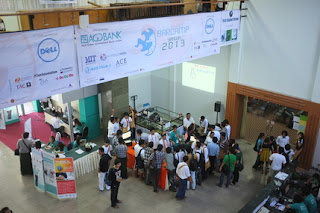
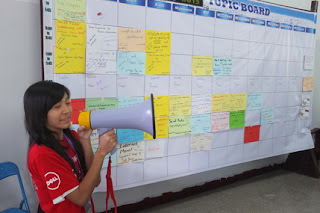
Barcamp Yangon Venue
Barcamp yangon Tech Talks
Make the web speak your language

In my talk How to become a Firefox Hacker I shared how one can leverage existing web development skills to contribute to Firefox. Mozilla Myanmar localization lead contributor Zinmin shared the Firefox localization process and gave a demo of Pootle web based translation tool. The participants were encouraged to join the Mozilla Myanmar community and localization sprint after the Barcamp Yangon.

Mozilla Myanmar localization demo by zinmin

Attending Barcamp Yangon gave me a good opportunity to keep the pulse the fast changing Myanmar. It was good to reconnect with the open source communities and meet people in technology and non-profit world. Next year I hope to attend Barcamp Mandalay, it seems to have more developer focused audience.

Ubuntu Myanmar Community

Mozilla Myanmar Localization Sprint

After Barcamp Yangon, Zinmin organized Burmese localization sprint in Yangon. The localization sprint provides hands-on training for new localizers. After a quick introduction from Zinmin and the team started translating remaining strings Firefox Aurora. The Pootle web based tool does perform well bandwidth constrained environment such as Myanmar. Zinmin cleaned up most of the translation errors that were blocking the productization of Firefox Burmese Aurora.

During the sprint, Sajal and I spent some time testing Firefox Mobile. Firefox Mobile is important in countries like Myanmar where there is a large growing mobile web users than desktop users. However due to economic sanctions Google Playstore is not available in this country. Burmese users resort to various alternative app stores to find apps for Android devices. Another problem is network latency, for instance, tweeting pictures was really difficult. We looked in how to test Android apps network latency and performance issues.

You can read more about Mozilla L10N sprint on Zinmin's blog post in Burmese and the download the latest Firefox Burmese Aurora here.

Technology Entrepreneurship and Start ups in Myanmar

Spent some time meeting various technology entrepreneurs in Yangon. Start-up incubators like Rocket Internet and few others opened shop in Myanmar. Expats and Burmese diaspora are returning to start technology start-ups. Along with opportunities from the burgeoning economy there are challenges: People with good technical skills are hard to come by, the overhead costs are really high due to inflated prices.

I hope you'll get a chance to visit Myanmar and experience its rich culture. Perhaps you might wanna join the
Barcamp Yangon next year or spend some time working I'll help you find a co-working space in Yangon.

Monday, March 4, 2013

15 Pesos Please! Flying Cebu Pacific Air

Somewhere over the ocean, en route to Hanoi on Cebu Pacific Air. I woke up with a parched mouth. Careful not wake the sleeping passengers, I whispered to the flight attendant for a glass of water. In the soft glow of the cabin lights, the flight attendant looked angelic. She said in a sweet voice '15 Pesos Please'. Cut to reality, crammed in the middle seat and my wallet safely stowed in the overhead compartment, I just couldn't believe the absurdity of it.


Forget the dancing flight attendants (See it on Youtube) and rock bottom ticket prices. Without basic services like a free glass of water, you can't expect any brand loyalty. Budget airlines do have to walk a tight rope in these trouble times, but they can't be this frugal.

What is your take on this? Share your experiences on budget airlines.

Wednesday, February 27, 2013

Mozilla Tagalog Localization Hackathon in Manila

Philippines has rich linguistic diversity. Through out its history Philippines was influenced by language and traditions of those who came in search of gold and other precious minerals. Today, you can hear smattering of Sanskrit, Arabic, Chinese, English, and Spanish in Tagalog.

Tagalog is the widely used Philippine dialect. Filipino, the National Language of the Philippines is composed primarily of Tagalog words, idioms, and phrases. Urban Filipinos are fluent in English. Traveling few hours away from Metro Manila, I noticed people preferred to speak in Tagalog.

The Mozilla Tagalog localization was kick-started by Seth Bindernagel around 2010. After a hiatus, the Tagalog localization effort now gained momentum thanks to good leadership and innovative community initiatives to encourage localization (See Help Us Translate Firefox Aurora to Tagalog & Get a Mini-Shirt). We also have new localization teams for Chavacano, Bikol and Lloko languages.

The hackathon in Manila provided me an opportunity to connect with the teams and I hope to keep this momentum going. Shared few ideas and emphasized on quality and consistence of translation. Such events are good for not only attracting new translators, but also discuss the problems in translation. The event attracted students, bloggers, technology professionals and contributors from Tagalog Wikipedia.

Talking to tagalog translators in manila

The Firefox Tagalog localization looks very promising. Came back from the hackathon with confidence that we can start productization very soon. And don't forget to join the next Tagalog Firefox Translation Marathon on April 9, 2013

Popular Posts